

Japanese Canadian Farm Labourers in World War Two
The Niagara Context
This article discusses the history of Japanese Canadians who were forcibly dispersed from British Columbia to the Niagara Peninsula as farm labourers during WWII. This history took place right on the doorstep of The Brown Homestead, from neighbouring townships, to St. Catharines and Louth, and even to Ridley Square right near our site. Yet it remains remarkably silenced and little discussed. Throughout the article, you will encounter the stories of several individuals who were exiled to Niagara during the war - Fumiko Uyede, George Hotta, Hattie Tanouye, Yoshimi Kinoshita, and Sachie Matsushita - which illuminate the broader context of Japanese Canadian farm labourers in Niagara while grounding this context in real voices and lived experiences. This article, although introductory, hopes to ignite conversation on this little discussed history, and act as a point of entry into further exploration of these stories.
Life in British Columbia - The Reality of the War Years
Yoshimi Kinoshita was born in 1929 in Vancouver, British Columbia. He was a second generation Japanese Canadian; his parents had moved from Japan to Canada in their early teenage years and held Canadian citizenship. Yoshimi’s father learned English by working for a newspaper in Vancouver shortly after he arrived in Canada. He later became the manager of the Royal Bank in Vancouver, and worked in this position throughout Yoshimi’s childhood. When Japan attacked Pearl Harbour in December of 1941, Japanese Canadians began to face a slew of restrictions of increasing severity. Among these was the prohibition of Japanese Canadian children from attending school. Yoshimi recalled that as a child, he was initially happy about this restriction because it meant that he had a vacation from school. Soon, however, his father was forcibly separated from the family and sent to a work camp. Yoshimi was sent with the remainder of his family to Hastings Park Interment Camp, followed by Slocan, BC. This marked the first in a long series of family separations and forced displacements. [1]
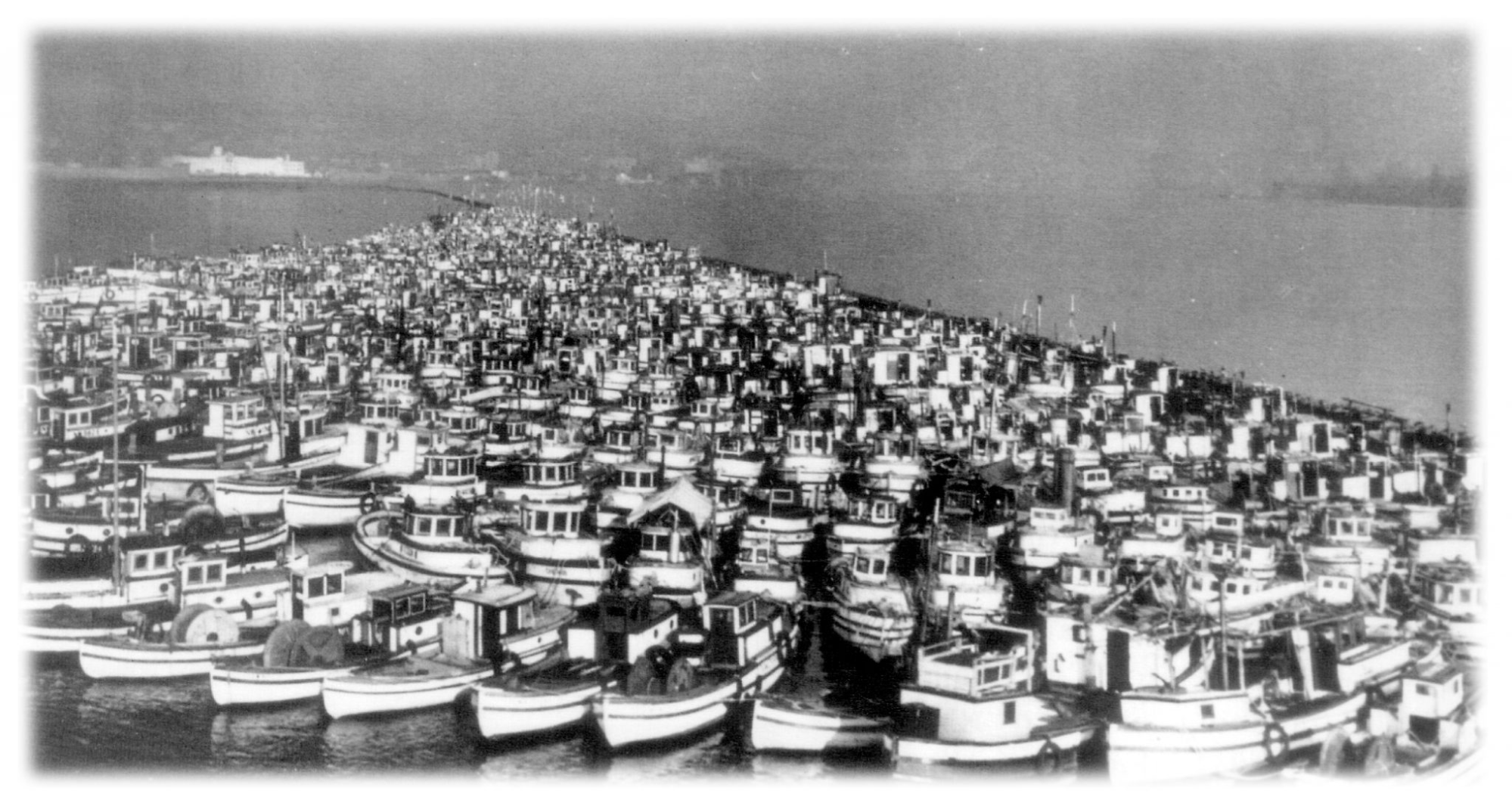
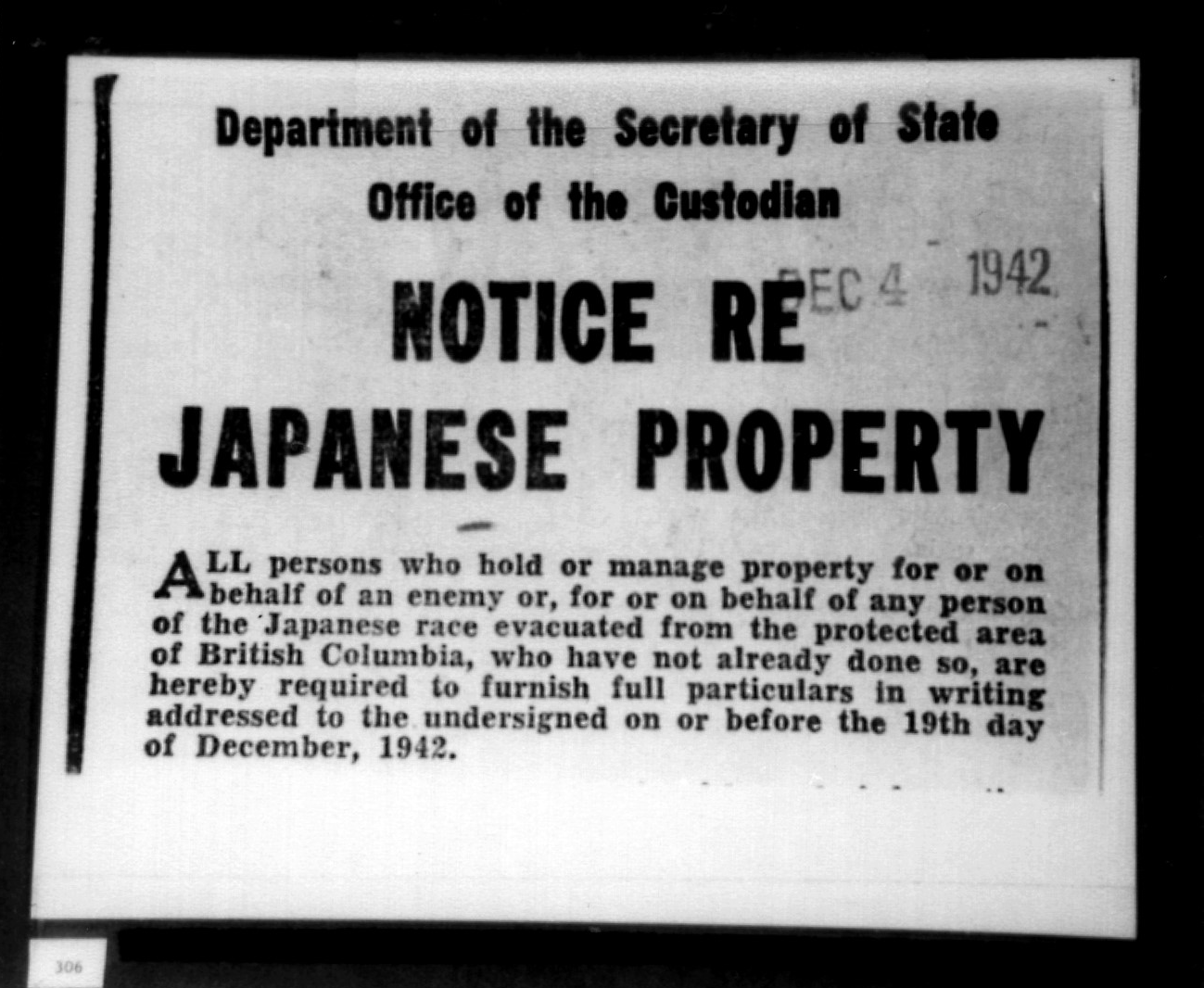
When WWII began, the majority of Japanese Canadians were living on the coast of British Columbia and in Vancouver. Many had been born in Canada, or had lived many years as Canadian citizens. [2] Before the war broke out, racism against Japanese Canadians had already existed in Canada for several decades. However, increasing tensions with Japan on the war front cast a direct light onto the racial discrimination that had been steadily brewing. In many ways, this racism was government sanctioned; when Japan attacked Pearl Harbour in December of 1941, the Canadian government imposed a strict curfew on Japanese Canadians, followed by the swift confiscation of homes and material property, with little to no compensation. Men between the ages of 18-45 were interned inland and families were forcibly torn apart. [3] Beyond bringing fear, anguish and uncertainty upon Japanese Canadian families, these brutal policies stirred a general climate of fear and hostility towards Japanese Canadians. [4]
Forced Eastwards: Ontario, Manitoba and Alberta
Figure 3: Internees arriving in Kaslo, BC, aboard the SS Nasookin. 1942. NNM 2012-20-5. National Nikkei Museum & Cultural Centre. From “Japanese Canadian History,” National Association of Japanese Canadians.
George Hotta was living in British Columbia when the war broke out. Prior to the war, his father had been a storekeeper, selling fish, groceries and confectionery. George reflected very positively on this time of life. In 1945, while living in Kaslo, BC, George answered a knock on his door to find two mounties on his doorstep. They asked for his name and, once he was identified, ordered him to leave BC the next morning for Ontario. With no notice, George found himself forcibly separated from his wife, and in a climate of prejudice and mistrust, compelled to work as a farm labourer in Ontario. [5]
In the spring of 1942, the Canadian government imposed a further law on Japanese Canadian men. With little more than a day’s notice, many were forcibly relocated to provinces east of British Columbia. [6] Two factors informed this decision: first, as many men working in the agricultural industry had gone to fight in the war, there was a notable lack of farm labourers left to support agricultural production on the home front. Second, and more sinisterly, the government was determined to stifle the purported “threat” that Japanese Canadian men posed by living coastally in Canada - a claim that was entirely fabricated. [7] When a family reunification policy was implemented in late 1942, entire families were forcibly exiled from British Columbia to do farm labour. In 1945, already in a state of anguish and disbelief, Japanese Canadians were presented with a final choice: to be “repatriated” to Japan, or to be “dispersed” eastward to Alberta, Manitoba and Ontario. [8] In reality, “repatriation” was much more akin to “expatriation,” as 75% of Japanese Canadians were born in Canada or held citizenship. [9]
Coming To Ontario
In 1945, Yoshimi Kinoshita’s family arrived in St. Catharines as farm labourers. The entire family was employed by Ted Tregunno, who operated a fruit and vegetable farm. Yoshimi recalls enjoying the work, and that after picking fruits he was sent to work in the cold storage unit, from which he would load fruits onto the train to be shipped elsewhere. When the summer season was over, Yoshimi attended school and his father worked an office job in the Tregunno business, using his banking expertise to do bookkeeping. Although the family was given a bungalow on the Tregunno farm, Yoshimi notes that it was not a suitable accommodation; there was no water and no light, and the family would often wake up in the morning covered in snow which had come through the cracks overnight. [10]
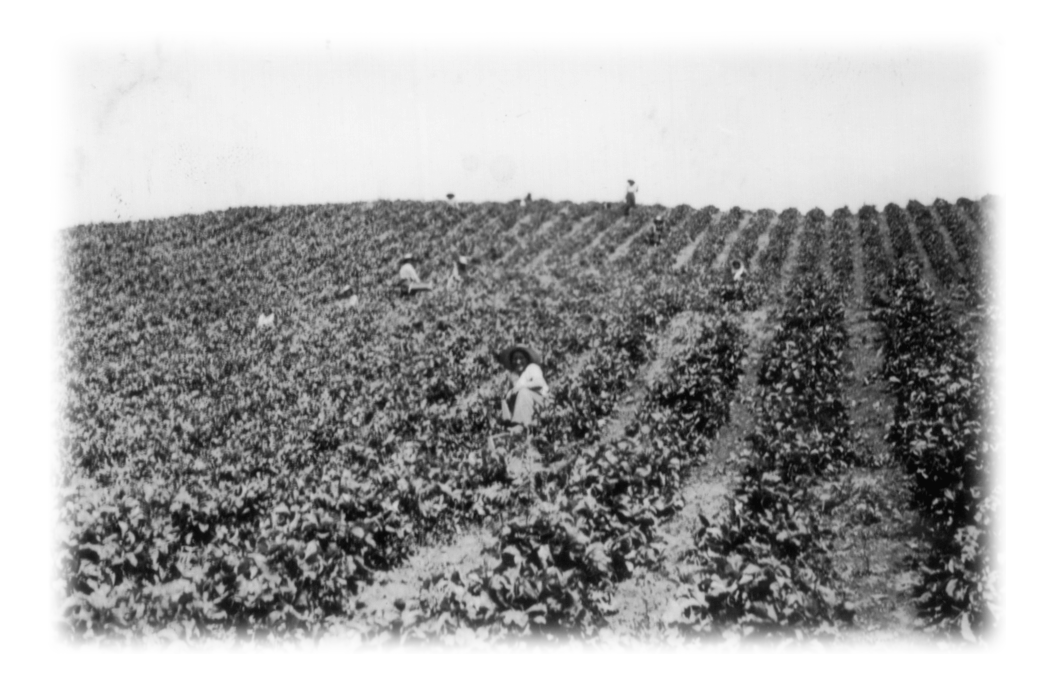
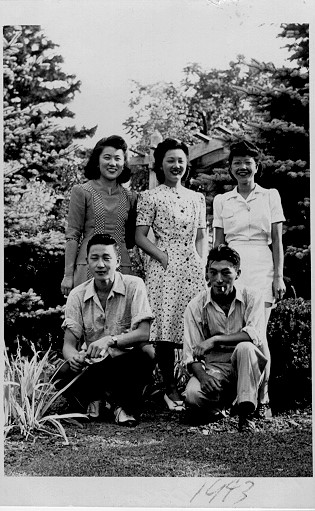
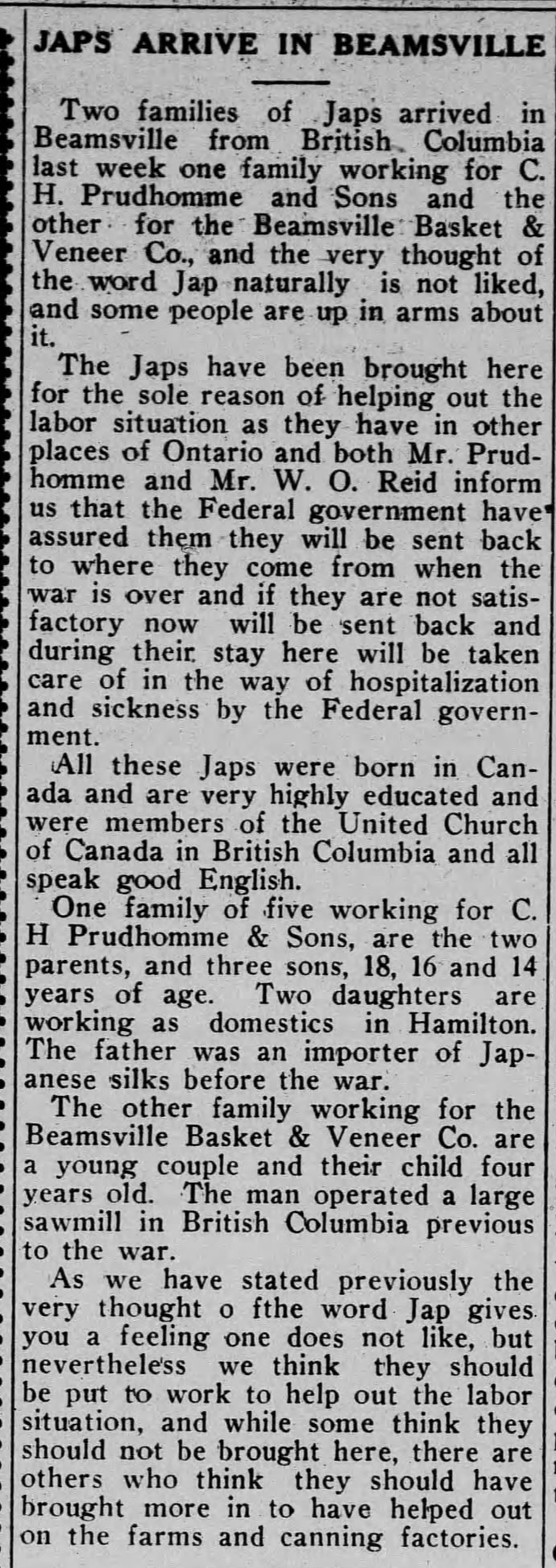
Those who were exiled to Ontario were placed primarily in agricultural and factory employment. Farmers whose production was suffering due to a lack of labourers could apply for Japanese Canadians (both male and female) to be “placed” on their farms, often at very low wages and in difficult conditions. [11][12] Several farms in the Niagara region hired Japanese Canadians with large families who had recently been expelled from BC and had few employment options. Prominent businesses that employed many Japanese Canadian families include the Prudhommes, who operated a fruit orchard, nursery and basket factory (C.H. Prudhomme & Sons), and the Beamsville Basket and Veneer Co.) in Beamsville; Ted Tregunno, operating fruits and vegetable farms in St. Catharines; and Martin Boese Sr. along with his son Isbrandt Boese, who ran a fruit farming, packing and canning business in Port Dalhousie. [13] Despite the brutal circumstances under which Japanese Canadian families arrived in the Niagara Peninsula, the move brought a greater degree of stability than that which they had experienced in BC. Some of the Isei (the first generation to arrive in Canada) continued to work on Niagara farms for many decades beyond the end of the war, and many among the younger Nisei (second generation) achieved higher education. [14][15][16] Eventually, some families saved enough money to buy their own farms and start independent businesses. [17]
Isolation and Restrictions on Everyday Life
At the outbreak of the war with Japan, Hattie Tanouye’s husband was sent to a road camp and separated from his family. With little options open to them, Hattie and her husband’s family made the decision to head east to farm sugar beets rather than be exiled to Japan. This was the only way they would be permitted to reunite with her husband. At first, Hattie went to Alberta. There, her husband died of leukemia. Hattie then applied to be transferred to St. Catharines to join her own family, who had already been sent there to do farm labour. At that point, the government was paying Hattie a very low fee to support her three children, and refused to pay for her transport to St. Catharines. She was forced to leave her two oldest children behind in Alberta, arriving in St. Catharines with only her youngest daughter. Farm life was isolating; there were very few other Japanese Canadians nearby as the government worked to disperse the Japanese Canadian population as thinly as possible. The location of the farm and lack of transportation also meant that there was no way to easily leave the farm to go elsewhere. [18]
Despite the ultimate increase in stability that many Japanese Canadian families experienced after being moved to the Niagara Region, the everyday living conditions that Japanese Canadians in Niagara faced during the war years were nonetheless shaped by several restrictive regulations. Japanese Canadians could not purchase or acquire land, engage in commercial enterprises, or negotiate their own contracts, despite having lobbied to do so. [19] They were often permitted to work as a family unit, but in several cases, an entire family unit would be paid one person's wages. [20] Farm labourers were also required to return a portion of wages to the government for any dependents. [21] A primary objective of the government in drafting the relocation policy was to prevent the over-concentration of Japanese Canadians in any one area. [22] As a result, there were few opportunities for Japanese Canadians to gather as a community. Those who were forcibly dispersed to Niagara farms experienced an intense feeling of isolation. Finally, the Minister of Labour had the authority to move any Japanese Canadian from one place to another in Canada at any time. Anyone opposing these rules would receive a fine and/or imprisonment. [23] Amidst these policies, Japanese Canadian families lived in a state of fear, loss and instability.
Attitudes and Reactions Towards the Arrival of Japanese Canadians in Niagara
Figure 6: The Standard, May 10, 1945, p. 17. Via Newspapers.com
In 1945, Fumiko Uyede and her husband Toshio Uyede were one of the first groups of Japanese Canadians to arrive in St. Catharines to work on a fruit farm. Before the war with Japan began, Fumiko had been employed on Vancouver Island doing housework for an officer in the Canadian army. As soon as tensions with Japan began to increase, she was promptly laid off. Fumiko reflects that life in British Columbia at that time was characterised by an intense state of fear and uncertainty. She recalls that throughout Canada, Japanese Canadians were so forcibly labelled as “the enemy” that she began to regard herself as such. When Fumiko and Toshio moved to St. Catharines, Fumiko was very aware of the anti-Japanese sentiments surrounding their arrival. She recalls arriving with the knowledge that anti-Japanese town council meetings were happening in multiple Niagara towns, and that these meetings were being reported on in local newspapers. Fumiko describes this time as being both awful and isolating. Eventually, she moved to Vine Street in Lincoln, Ontario. Even there, although she felt settled and well-incorporated into community activities, she also notes that her children experienced some hostility from neighbourhood children, likely, she reflects, due to the influence of their parents. [24]
Sachie Matsushita worked with her family on the Tregunno Farm for four years, saving every penny they could during that time. In 1951, the family was able to purchase six acres of land in Martindale Heights (now Ridley Square) to establish their own farm. The farm did not bring sufficient income to support the family, and in 1953 Sachie’s father began additional work in a maintenance job. Sachie and her younger brothers went door to door selling produce to earn extra income. During that time, neighbours were very supportive. They gifted tables, chairs, food and firewood to the family to help them establish the farm. Concurrently, Sachie recalls facing subtle racism in school by both students and teachers. [25]
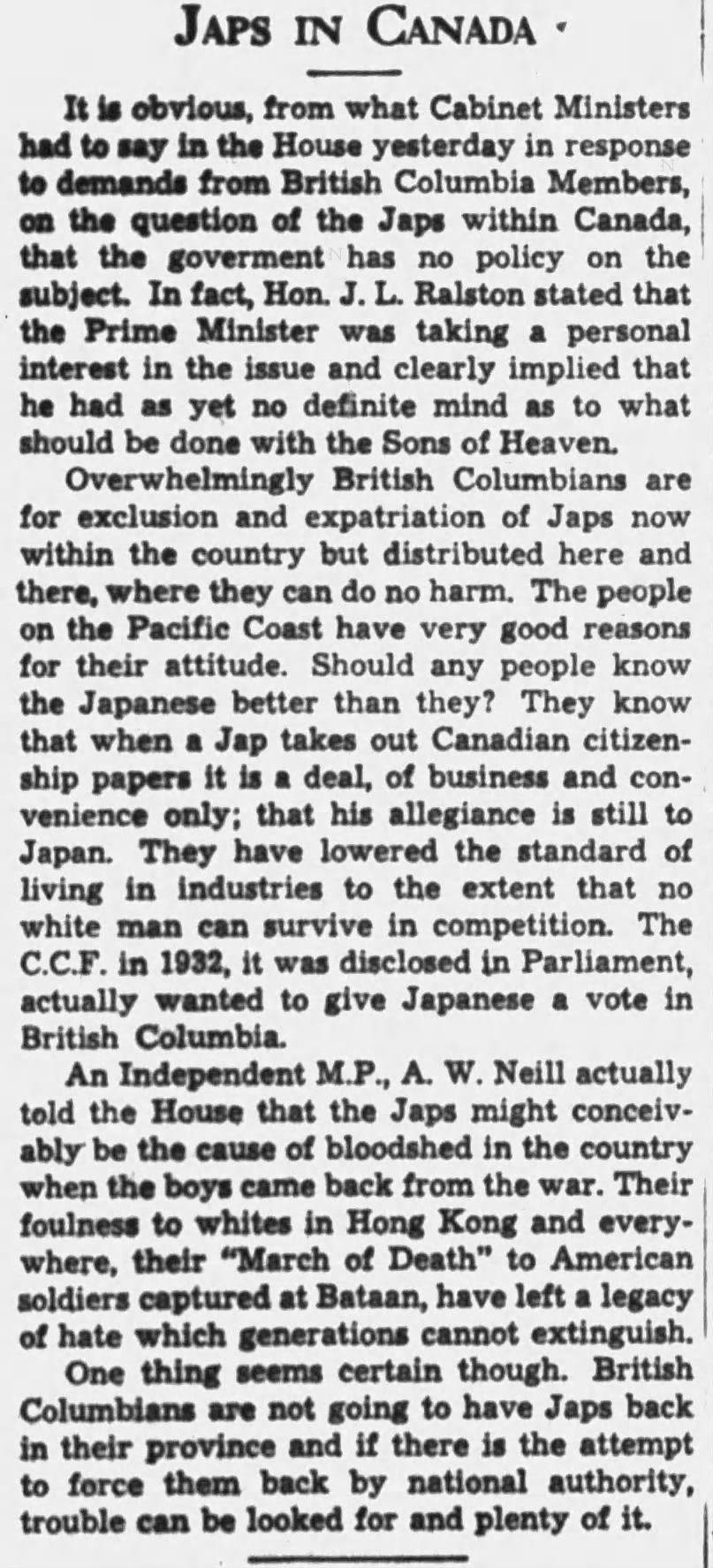
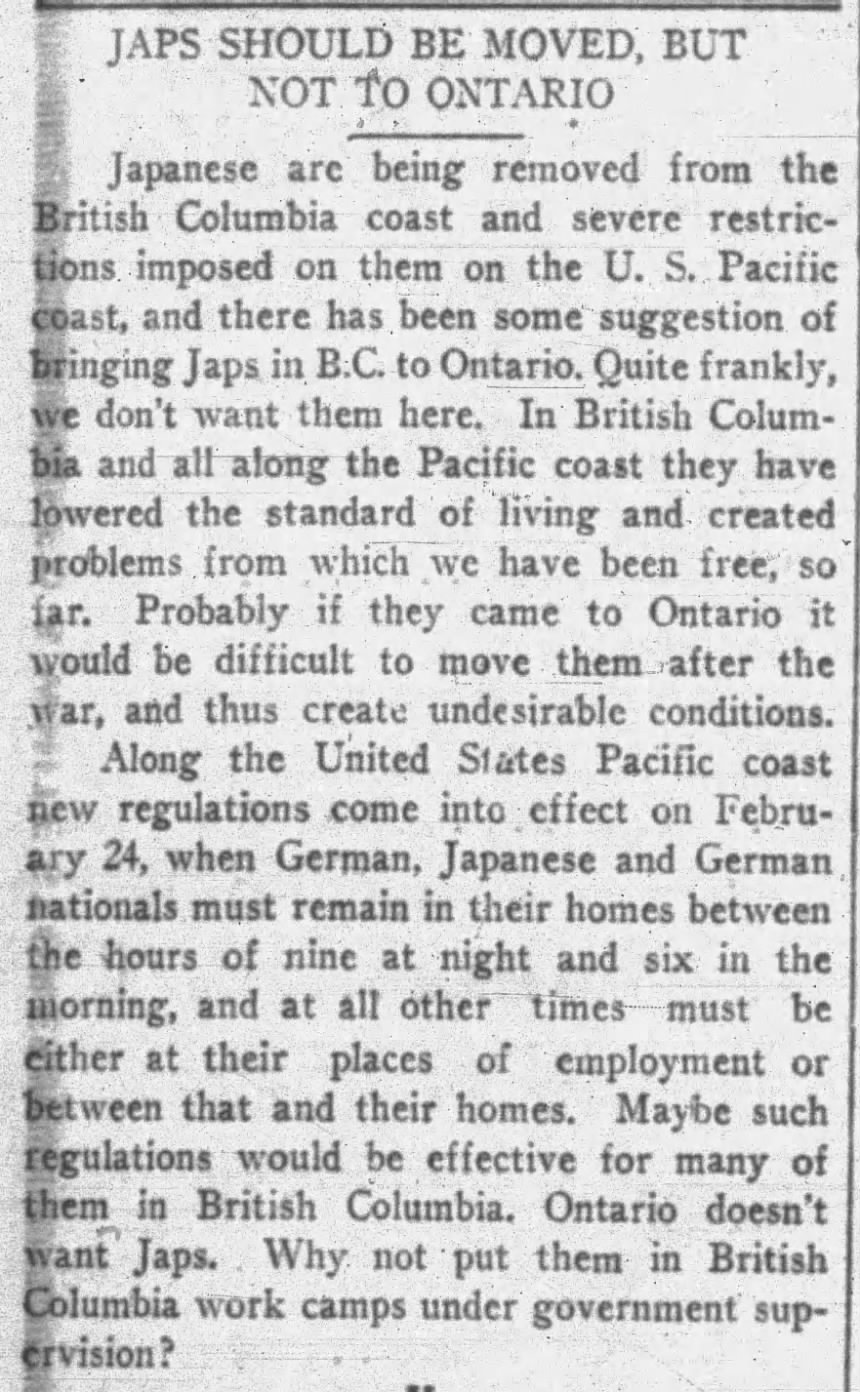
The arrival of Japanese Canadian farm labourers to Niagara was met with a slew of mixed reactions. Curiosity and kindness were accompanied, in turn, by anxiety, fear and in some cases, open hostility. As Ontario had fewer discriminatory laws than BC, Japanese Canadians in the Niagara Region received somewhat better treatment and more acceptance than they had on the west coast. [26] Yet there was a significant degree of fearmongering originating from governmental bodies - sentiments which made their way into local newspapers and were widely disseminated. In reaction to Japanese Canadians working on the Tregunno Farm, Cecil Secord, reeve of Grantham and warden of Lincoln County, stated that the ratepayers of Lincoln were going to throw out Japanese Canadians to prevent inevitable mob rule. [27] Both claims were entirely fabricated. An article in the Lincoln Post Express September of 1942 noted that the Lincoln County Council (echoed by the Beamsville Council in 1943) vigorously protested the arrival of Japanese Canadians so strategically situated in the centre of vast war industries and power plants. [28][29] Various governmental bodies suggested that Japanese Canadians in Niagara be interned, placed under house arrest in BC, forcibly exiled to Alaska, or sent to government work camps. [30] Concurrently, however, the Beamsville Express noted that Japanese Canadians were necessary to aid in the war effort, were well-educated and had what to contribute to the community. [31] Several members of the community provided support in the form of housing and employment, as well as furniture, food, and firewood to help Japanese Canadian families establish themselves in Niagara. Amidst this tangle of opinion, treatment and policy, another government document from 1942 included an anti-discrimination clause mandating that there be no discrimination against any employee on the reason of their nationality or racial origin. [32] The social and political climate that met Japanese Canadians in Niagara was, therefore, undoubtedly mixed.
In Their Own Words
There is a notable lack of sources describing the forced relocation of Japanese Canadians to Ontario, and far fewer on their settlement in Niagara. There are a few possible reasons why this might be the case. When Japanese Canadians were first exiled to Ontario, they were banned from settling in Toronto, despite a widespread desire to do so. When this ban was lifted after the war, families who had originally been restricted from settling in larger cities ultimately moved into urban centres. [33] Few families went to Niagara and remained there in the long term, leaving only a small number of individuals to share their experiences of settling in the region. Further, due to the government objective of preventing the overconcentration of Japanese Canadians in any one area, life in the Niagara Peninsula was relatively isolated, and there were few opportunities for Japanese Canadians to gather as a community to share their stories.
In 1996-1997, however, Addie Kobayashi - a Nisei woman who moved to Niagara in 1989 and lived there for nine years - conducted an oral history project which poignantly captured the experiences of several Japanese Canadians who had been farm labourers in Niagara in their own words. This project, published as a book entitled Exiles in Our Own Country: Japanese Canadians in Niagara, provides a deeper window into the history of Japanese Canadian farm labourers in the Peninsula. Building off of the work of Addie Kobayashi, the Lincoln Museum and Cultural Centre developed a digital exhibit called “Exiles in Our Own Country,” which presents a detailed account of the history and lived experiences of Japanese Canadians in Niagara through to the present day. The Brock University Archives & Special Collections are also a valuable resource, housing several oral history interview transcripts narrated by Japanese Canadians who were sent to Niagara during the war, as well as government correspondences discussing policies of forced relocation.
About the Author: Gabrielle Maerov is the summer student Museum Educator at The Brown Homestead.
Footnotes
Yoshimi Kinoshita, interview by Tom Matsushita, March 17, 1996, interview 1.4, transcript, Japanese Canadians in Niagara Fonds, Brock University Archives, St. Catharines, Ontario.
Addie Kobayashi, “Introduction to Niagara,” in Exiles in Our Own Country: Japanese Canadians in Niagara, ed. Addie Kobayashi and Tom Matsushita (Nikkei Network of Niagara, 1998).
“Japanese Canadians in British Columbia” and “The Tipping Point” in Jasmine Proteau, Lynn Deutscher-Kobayashi and Les Takahashi, “Exiles in Our Own Country: Japanese Canadians in Niagara,” Lincoln Museum and Cultural Centre, August 25, 2022, https://www.communitystories.ca/v2/japanese-canadians-niagara_canadiens-japonais/story/exiles-in-our-own-country/.
“Japs in Canada,” The St. Catharines Standard, May 6, 1944, https://www.newspapers.com/article/the-standard/205553805/.
George Hotta, interview by Tom Matsushita, 1996, interview 1.3, transcript, Japanese Canadians in Niagara Fonds, Brock University Archives, St. Catharines, Ontario.
Addie Kobayashi, “Historical Background,” in Exiles in Our Own Country: Japanese Canadians in Niagara, ed. Addie Kobayashi and Tom Matsushita (Nikkei Network of Niagara, 1998).
Japanese Locations and Employment, Alberta and Manitoba, 21 August, 1945. RG36-27, Volume 2, File 40, Japanese Division [Department of Labour] Fonds, Library and Archives Canada, https://loi.uvic.ca/archive/lac_rg36-27_volume_02_file_40.html.
“Hard Choices” in Jasmine Proteau, Lynn Deutscher-Kobayashi and Les Takahashi, “Exiles in Our Own Country: Japanese Canadians in Niagara,” Lincoln Museum and Cultural Centre, August 25, 2022, https://www.communitystories.ca/v2/japanese-canadians-niagara_canadiens-japonais/story/hard-choices/.
Addie Kobayashi, “Introduction to Japanese Canadians in Niagara,” National Association of Japanese Canadians, Toronto Chapter, August 21, 2012, https://torontonajc.ca/an-introduction-to-japanese-canadians-in-niagara/.
Yoshimi Kinoshita, interview.
Letter from A. Macnamara, Associate Deputy Minister, to Austin C. Taylor, Chairman, BC Security Commission. 19 August, 1942, MG27-IIIB5, Volume 24, File 67-25-4, Ian Mackenzie Fonds, Library and Archives Canada, https://loi.uvic.ca/archive/lac_mg27-iiib5_volume_24_file_67-25-4.html.
Yoshimi Kinoshita, interview.
National Association of Japanese Canadians, “Introduction to Japanese Canadians in Niagara.”
Ken Teshima, “Moving to Beamsville During WWII,” presentation at the Lincoln Museum and Cultural Centre, November 12, 2021
Kinoshita, interview
Fumiko Uyede, interview by Addie Kobayashi, 1996, interview 1.18, transcript, Japanese Canadians in Niagara Fonds, Brock University Archives, St. Catharines, Ontario.
Sachie Matsushita, interview by Addie Kobayashi, n.d., interview 1.8, transcript, Japanese Canadians in Niagara Fonds, Brock University Archives, St. Catharines, Ontario.
Hattie Tanouye, interview by Addie Kobayashi, 1996, interview 1.14, transcript, Japanese Canadians in Niagara Fonds, Brock University Archives, St. Catharines, Ontario.
Japanese Locations and Employment, 21 August 1945, Japanese Division [Department of Labour] Fonds
Ken Teshima, “Moving to Beamsville During WWII”
Report from the Minister of Labour, Department of Labour, to the Governor General in Council. 4 March, 1942, MG27-IIIB5, Volume 24, File 67-25-4, Ian Mackenzie Fonds, Library and Archives Canada, https://loi.uvic.ca/archive/lac_mg27-iiib5_volume_24_file_67-25-4.html.
Ibid.
Ibid.
Fumiko Uyede, interview.
Sachie Matsushita, interview.
“Farm Labour” in Jasmine Proteau, Lynn Deutscher-Kobayashi and Les Takahashi, “Exiles in Our Own Country: Japanese Canadians in Niagara,” Lincoln Museum and Cultural Centre, August 25, 2022, https://www.communitystories.ca/v2/japanese-canadians-niagara_canadiens-japonais/story/farm-labour/.
National Association of Japanese Canadians, “Introduction to Japanese Canadians in Niagara.”
“Japs’ Arrival Brings Protest,” The Lincoln Post Express, September 23, 1942, https://www.newspapers.com/article/lincoln-post-express/205705207/.
“Beamsville Council Hold Special Meeting,” The Lincoln Post Express, March 24, 1943, https://www.newspapers.com/image/1189487398/?match=1&terms=jap&search-id=627c3657-e807-4690-bbe9-10c8def2a849&search-rank=2.
“Japs Should Be Moved, But Not to Ontario,” Niagara Falls Review, February 5, 1942, https://www.newspapers.com/article/niagara-falls-review/205554101/.
“Japs Arrive in Beamsville,” The Beamsville Express, September 23, 1942, https://www.newspapers.com/article/lincoln-post-express/205553428/.
Memorandum of Agreement between the Dominion of Canada and the Province of Ontario, 1942, RG2 A-1-A, Volume 1758, File 2559G (PC 1942-3903), Privy Council Office Fonds, Library and Archives Canada, https://loi.uvic.ca/archive/lac_rg2_a-1-a_volume_1758.html.
National Association of Japanese Canadians, “Introduction to Japanese Canadians in Niagara.”
Addie Kobayashi, Exiles in Our Own Country: Japanese Canadians in Niagara, ed. Addie Kobayashi and Tom Matsushita (Nikkei Network of Niagara, 1998).